Tuesday, May 5, 2015

Buy a house with no money down using the USDA Rural Development Program

Buy a house with no money down using the USDA Rural Development Program

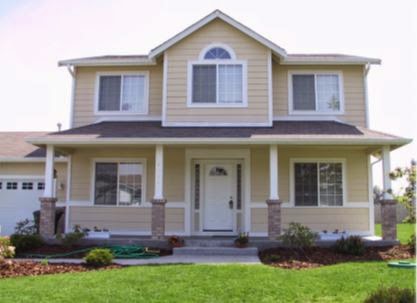
Buy a house with no money down using the USDA Rural Development Program - Image Courtesy USDA.gov

Are you thinking about buying your next home, but don't have any money down? Did you know that you can buy a house with no money down using the USDA Rural Deveolpment Program? It's true! Keep reading below for more details!

Not eligible for the USDA Rural Development Program? You can still buy a house with as little as 3% down. Talk to your lender or call me for more details!

ELIGIBILITY

Before going any further, lets discuss a little bit about who qualifies.

  • Income limit of $74,900 for a family of 4 or less
  • Must be able to afford mortgage payments including taxes and insurance
  • Reasonable Credit Histories (usually 620 or higher)

QUALIFY

Now that you're eligible for a USDA Loan, you'll need to know how to qualify.
  • You must be in an eligible area.

Fortunately, the entirety of Lewis County is eligible, so that is not difficult to figure out by your address! However, if you live outside Lewis County, you can check your area's eligibility here:


APPROVAL

You're eligible and qualified, now you must get approved! As discussed before, you must have at least a 620 credit score.

Not sure what your credit score is? I use a FREE site called CreditKarma.

You will need the following:
  • Loan Application
  • Pay Stubs last two months
  • W-2s for last two years
  • Bank statement for last two months
  • Other items required by lender

Make copies of everything! Make sure to ask your lender before the meeting what paperwork they will need so you won't have to make multiple trips!

AVAILABLE HOMES

A USDA home must be "Safe, Sound, and Sanitary". Here are the qualities in a home to look for:
  • Cannot be sub-dividable
  • Cannot have "farm buildings" or any other buildings that could be used to generate income
  • Must have adequate water and wastewater systems
  • Cannot have any pools
  • Must be functionally adequate
  • Must be in good repair
  • Cannot be in flood plain (not 100% accurate, but a good rule of thumb since only a small percentage of properties would actually qualify in a flood plain)
  • Cannot be manufactured (again, not 100% accurate for similar reasons as above)
  • Must be owner-occupied


These are the basics you will need to know when thinking about buying a home or property. You CAN buy a house with no money down using the USDA Rural Development Program!

Still not sure where to start?
Contact me today and I'll put you in touch with a USDA Specialist in your area!

Search All Homes For Sale
Homes Close to Where You Work
What is Your Home Worth?
Mortgage & Refinance
Free List of Foreclosed Homes For Sale
Eren Millam
Realty World Cosser & Associates
360-219-3616
emillam@rwcosser.com

Wednesday, January 14, 2015

8 Tips for First Time Home Buyers: Tip #1 Part 2

8 Tips for First Time Home Buyers: Tip #1 Part 2

Buying your first home is a complex and stressful event in your life. For some, just the thought of it or the fear of the unknown is enough to make your head explode! Wouldn't it be nice if someone could write a guide for first time home buyers? You're in luck! The following 8 Tips for First Time Homebuyers are going to lay out the transaction process, loan programs, credit concerns, down payments, total costs and fees, as well as other information to give you enough confidence to boldly consider owning your very own home!


Tip #1 Part 2

The last stage we discussed was the offer stage. You know, you make an offer, have buyer's remorse, freak out after seeing all those zero's! Once the offer is accepted is where great Realtors separate themselves from the pack.


The Inspection Stage

As soon as your offer is submitted, you will have 10 days to schedule an inspection with an inspector. Your Realtor may have some suggestions of quality inspectors, but who you choose is up to you. Typically, an inspection will cost anywhere between $350-$500, but will save you money in the long run. Inspectors check out all the systems and structure such as electrical, plumbing, foundation, roof, etc. and can notify you of any defects. You can then go back to the seller and ask for some or all of these repairs saving you TONS and you move in to a house knowing it won't fall in on you! You can do an inspection yourself, but I would not personally recommend you do that especially on your first home.


The Appraisal Stage


Although most lenders require you to pay the $400-$500 appraisal fee, the appraisal is not for you. It is for the bank to determine the value of the property. As a lender, if they loan you $200,000 on a home worth $150,000, they lose $50,000 as soon as they approve the loan! The appraiser is not as extensive as an inspection, but they are required to ensure specific conditions are met per the requirements of the loan itself. For example, if the house you are interested has stairs over 36 inches in total height from the ground, it is a requirement that a handrail be attached or the loan will not go through.  If the appraisal comes in low or has requirements, you will have a few different options on how to proceed but they can at times kill the deal.


The Closing Stage

All the major hurdles have been overcome to this point, now you are just waiting. Sometimes things happen really fast and sometimes they happen really slow! This is the time that the bank is finishing its paperwork and the title company is working
on closing statements. You still are not handed the keys even after you have signed. The transaction and title documents need to be recorded with local government officials and then your bank will fund the deal. Now you can go pick up the keys! Congratulations! If you have any questions during this stage or any other, it is always best to contact your Realtor. If they don't have the answer, they know someone who will and put you in touch with them.

Stay tuned for Tip # 2!
Search All Homes For Sale
Homes Close to Where You Work
What is Your Home Worth?
Mortgage & Refinance
Free List of Foreclosed Homes For Sale
Eren Millam
Realty World Cosser & Associates
360-219-3616
emillam@rwcosser.com

Thursday, January 8, 2015

8 Tips for First Time Home Buyers: Tip #1

8 Tips for First Time Home Buyers: Tip #1

Buying your first home is a complex and stressful event in your life. For some, just the thought of it or the fear of the unknown is enough to make your head explode! Wouldn't it be nice if someone could write a guide for first time home buyers? You're in luck! The following 8 Tips for First Time Homebuyers are going to lay out the transaction process, loan programs, credit concerns, down payments, total costs and fees, as well as other information to give you enough confidence to boldly consider owning your very own home!


The Home Buying Process

While there are many steps between renting and getting handed the keys to your very first home, the process can be divided into a few main categories.

·         The Home Search Stage
·         The Pre-Approval Stage
·         The Home Viewing Stage
·         The Offer Stage
·         The Inspection Stage
·         The Appraisal Stage
·         The Closing Stage


Otherwise known as HPHOIAC..or HIPPOHOIACK. (This is not real, and nobody uses its, but feel free to make it your own!)


The Home Search Stage 

Nine-Five percent of all home buyers start their search online. Before the internet, the only way to access homes for sale was through your local Realtor. Now you can log on to your favorite real estate site and get information (though not always accurate or reliable) about any home for sale in the country! Most buyers live in this stage for 12-18 months before moving on to the next stage.


The Pre-Approval Stage

Most buyers do not go through this stage in this order. If you are interested in a home, you go to a Realtor who can gain access to that home. Although you SHOULD get pre-approved before the Home Viewing Stage, most Realtors are happy to meet with you and discuss the process - but will want you to get pre-approved before showing any homes. Pre-approval just ensures that you are able to afford the homes that you are looking at. Many buyer's will scoff at this idea, but because a Realtor is paid on commission, their most valuable asset is time. If a Realtor spends time on activities that don't promise to produce any income, they will quickly work themselves into unemployment!


The Home Viewing Stage

You are pre-approved. Congrats! Now you're Realtor is madly scouring all available sources of homes for sale to find the house that will become your home! This can become a frustrating time as you learn to balance between your wants, available homes, and your price range. You may want to give up, but you can't. You can't because new homes are hitting the market every day! Other properties are reducing the price and now are in your range! If you take a day or two off, you might miss your dream home!


The Offer Stage

Talk about daunting! This is where you found a house to call a home. You write your earnest money check of $500+, gulp! This is the biggest transaction in your life and look at all those zeros! Are you freaked out yet? It happens to everyone. A good Realtor will help you overcome those fears by providing you with helpful information and planning. Earnest money is a good thing. Before EM, sellers could sue potential buyers for failing to perform the contract. Now, the worst thing that can happen is you lose your EM. A good Realtor will protect you from losing your EM by keeping on top of important dates and including multiple contingencies! Another use of EM is to show the seller you are serious about your offer. You did mean to offer all that money, right?!


Stay Tuned for Part 2 of 8 Tips for First Time Home Buyers: Tip #1
We will cover the Inspection, Appraisal, and Closing stages!
Search All Homes For Sale
Homes Close to Where You Work
What is Your Home Worth?
Mortgage & Refinance
Free List of Foreclosed Homes For Sale
Eren Millam
Realty World Cosser & Associates
360-219-3616
emillam@rwcosser.com

Monday, December 29, 2014

2 Ways to Avoid Paying Capital Gains on the Sale of Your Home

2 Ways to Avoid Paying Capital Gains on the Sale of Your Home


"In this world nothing can be said to be certain, except death and taxes." - Benjamin Franklin, 1786

Unless you live in a utopian anarchy, taxes are a certainty. However, there are 2 ways to avoid paying capital gains on the sale of your home!


1031 Exchange vs Capital Gains Exclusion

The first, more well-known way to avoid paying the tax man is a 1031-Exchange. Unless you are an investor, this means absolutely nothing to you. Many homeowners fear the thought of selling their home because of the capital gains taxes that will be collected, but 

a 1031-Exchange does not apply to a residential homeowner! 

Before you scream in anguish, let me explain how this is a good thing!


Capital Gains Exclusion


The Internal Revenue Service (IRS) has a loophole for homeowners regarding capital gains.
It is so simple and easy to apply for, you are going to wonder why you worried in the first place!

According to the IRS,
"In general, to qualify for the exclusion, you must meet both the ownership test and the use test. You are eligible for the exclusion if you have owned and used your home as your main home for a period aggregating at least two years out of the five years prior to its date of sale. You can meet the ownership and use tests during different 2-year periods. However, you must meet both tests during the 5-year period ending on the date of the sale. Generally, you are not eligible for the exclusion if you excluded the gain from the sale of another home during the two-year period prior to the sale of your home"

In English, all you need to do to qualify for the capital gains exclusion is to live in your house for 2 years or more during the 5 years prior to the sale. You can't claim the exemption if you've already claimed another exemption during the 2 years prior to the sale.

The one limit to this exemption is if you profit over $250,000 on the sale. While that is highly unlikely on a normal residential purchase, the 250K is only for single persons. It increases to $500,000 if you're married or in a domestic partnership!

Pretty simple and way better than the 1031-exchange!

A 1031-Exchange is beneficial to investors, though.

1031-Exchange


The concept is simple, but I recommend speaking with a lawyer about the details! You sell a property and defer the taxes by reinvesting them into a similar property. For example, you sell a residential rental property, you can then avoid paying capital gains on the sale of your property by purchasing another residential rental property.  The annoying part of this is that 

you must find the replacement property within 45 days and the transaction must be closed within 180 days.

Conclusion

There are 2 ways to avoid paying capital gains on the sale of your home. The important concepts to remember is that a 1031-Exchange DOES NOT APPLY to residential homeowners, but it is a great thing for investors. Likewise, residential homeowners have their own capital gains exclusion and it is at least 10x better than a 1031-Exchange!

For more information on Capital Gains Exclusions and 1031-Exchanges, check out the following links:

http://www.irs.gov/taxtopics/tc701.html - Capital Gains Exclusion, IRS

IRS


Search All Homes For Sale
Homes Close to Where You Work
What is Your Home Worth?
Mortgage & Refinance
Free List of Foreclosed Homes For Sale
Eren Millam
Realty World Cosser & Associates
360-219-3616
emillam@rwcosser.com

Monday, December 22, 2014

6 Things Realtors Want First Time Home Buyers to Know

6 Things Realtors Want First Time Home Buyers to Know

1. Buying Your First Home is Fun and Exciting!


As exciting as this is for you,  your agent is right there with you! There will be ups and downs. Your agent is there to keep emotions even and level so you can make the best choices possible for you and your family.

2. Your Agent Wants to Help!


The majority of agents work on commission, but that isn't the driving force. Commission is the reward at the end of a long, arduous process. Your agent won't tell you everything they have to deal with because their job is to make the deal as EASY and SEAMLESS as possible for you.

3. You Should Select an Agent You Trust!


We all have people in our lives - family, friends, and the like - that we can inherently trust. However, they are not experts in real estate. Not that you should exclude them from the process, but if you trust their guidance over your agent's, then you have selected the wrong agent AND what are you even using an agent for? You may even have an experienced former agent as your friend, but things change quickly in real estate. Market conditions, regulations, and loan programs can and do drastically change from one year to the next.

4. The Number #1 Expectation of You is Loyalty!


Back to #2, agents are paid on commission. If you think your agent is great, but you decide to write an offer with another agent - you just thanked your first agent by punching them in the gut! If you don't think your agent is doing their very best for you, discuss it with them. If they refuse to meet your expectations, then switch! However, if they are meeting or surpassing your expectations and you switch for no reason, then you just gave a potential paycheck that they were working hard to earn to someone else who hasn't done anything up to this point.
Another way to look at this is if you put an offer on a property with an agent you trust and they bring another buyer to put a second offer on the property. You are now in a bidding war and the agent's commission is going up! This would be a bad agent in my opinion, but this is perfectly legal. If you expect your agent to be loyal to you, then you should also be loyal to them!

5. It Doesn't Cost You Anything to Work With a Buyer's Agent!


I have had a few clients tell me they were reluctant to speak with me because they didn't know how much it cost just to ask me about the process! Here's good news: The Buyer Pays Nothing! The commission that a buyer's agent receives comes from the seller's proceeds. If you are thinking of buying in the next 12 months, make sure you speak with an agent first so they can get you directed on the right path.

6. You Don't Need a Large Down Payment!


Many people in my area are unaware of the USDA loan program which does not require a down payment. Let me repeat that. In my area, you can buy a home for 0% down! Another question that arises is, how good does your credit score need to be? 620 is the minimum. It doesn't take much to get you out of renting and in to owning your first home. Again, this is why it is important to speak with an agent early in the process so if your credit is low - they can assist you getting it to where it needs to be when you are ready to make an offer!